
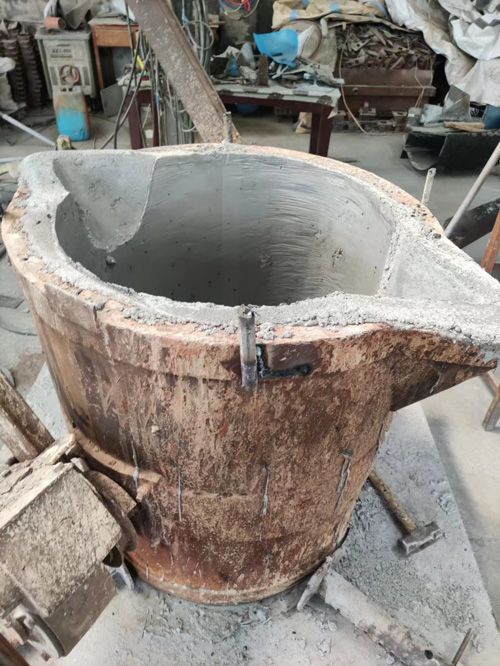
Ladle Bottom Castable Spalling

Hot Metal Ladle · Bottom

Problem Details

Background

The bottom of a hot metal ladle (torpedo or open ladle) is the most concentrated iron-impact and temperature-cycling zone. At each fill, iron falls from height and strikes the bottom directly; the bottom lining simultaneously bears mechanical impact, thermal shock and slag/iron attack—the weakest point of ladle lining life.

Failure Mechanism

Mechanical erosion: repeated impact at the iron impact point progressively wears the castable surface and forms impact pits; higher impact energy and more concentrated landing points worsen wear. Thermal-shock cracking: the empty—fill—empty cycle repeatedly subjects the bottom to 300–1450℃ temperature swings, and thermal stress forms a cracking network inside the castable. Spalling: cracks propagate and connect under subsequent impact and thermal shock, forming laminar spalls; in severe cases the shell is exposed. Chemical attack: residual slag and sulfur/alkali in iron attack the castable matrix, lowering surface strength.

Consequences

After bottom spalling, iron contacts the permanent lining or shell directly, causing local overheating, bottom reddening and a risk of breakout. Bottom life shortens, ladle changes and repairs become frequent, raising refractory consumption and logistics cost.

Solution

Material Selection and Parameters

Select bottom castable for "impact resistance + thermal-shock resistance + slag resistance":

  • Material system: high-alumina-SiC (Al₂O₃≥70%, SiC≥15%) or corundum (Al₂O₃≥85%) castable applied monolithically. SiC improves washout resistance and thermal conductivity for slag-coating self-protection; corundum gives high strength and impact resistance;
  • Fiber reinforcement: add 2–3vol% heat-resistant stainless steel fibers with random orientation for toughening, greatly improving impact and thermal-shock spalling resistance;
  • Thickness design: thicken the impact zone (typically 150–250mm), optionally with a buffer layer or replaceable precast blocks at the landing point.

Installation Essentials

Monolithic casting: cast bottom and wall junction in one pour to avoid construction joints. Vibration: vibrate fully for density. Bake-out: follow the heat-up curve strictly with holds in dehydration ranges; never heat fast. Curing: keep moist for 24–48 hours and reach strength before service.

Maintenance

Avoid long empty-ladle dwells and rapid heating/cooling in operation. Inspect bottom wear and cracks regularly; patch deep impact pits with repair material; replace the working lining when severely thinned, recording ladle life data to optimize grade and thickness.

Recommended Products

Iron Ladle Castable

Iron Ladle Castable

Iron ladle castable is a low-cement monolithic for iron ladle linings. Bauxite or corundum aggregates with Al2O3 of 60-85% are selected by slag-line conditions. Low-cement bonding and integral casting resist slag attack, thermal shock and metal penetration.

Learn More →
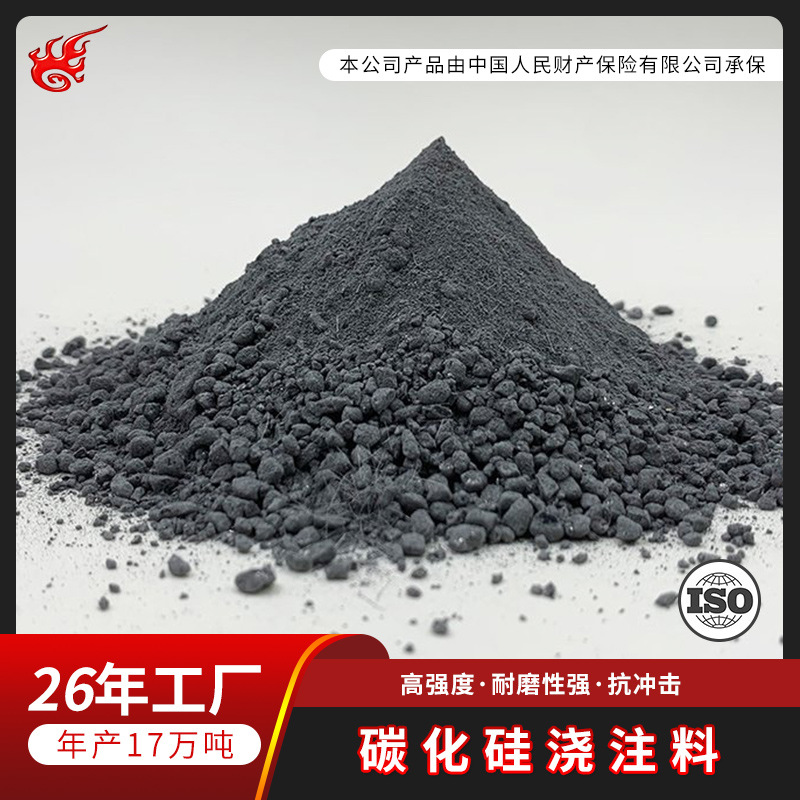
Steel-Fiber Reinforced Castable

Steel-Fiber Reinforced Castable

Steel-fiber reinforced castable with 2-3 vol% heat-resistant stainless fibers provides random reinforcement and toughening. Al₂O₃≥65%, 1400℃ max service, greatly improved flexural and thermal-shock spalling resistance.

Learn More →

Other Problems of This Kiln

More questions? Send us an inquiry

Contact Us

Contact
17513376789
WeChat QR codeWeChat · 17513376789