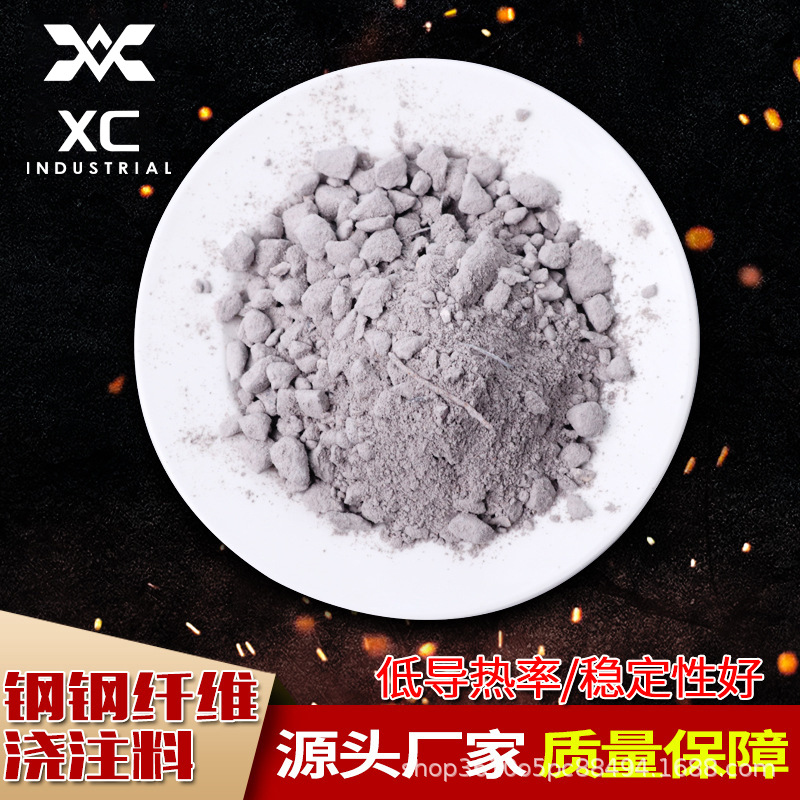
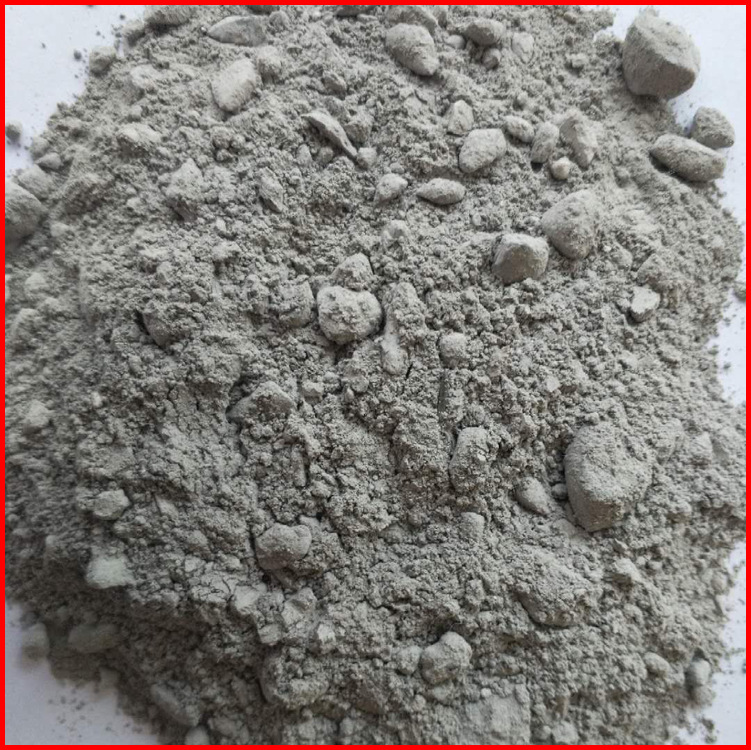
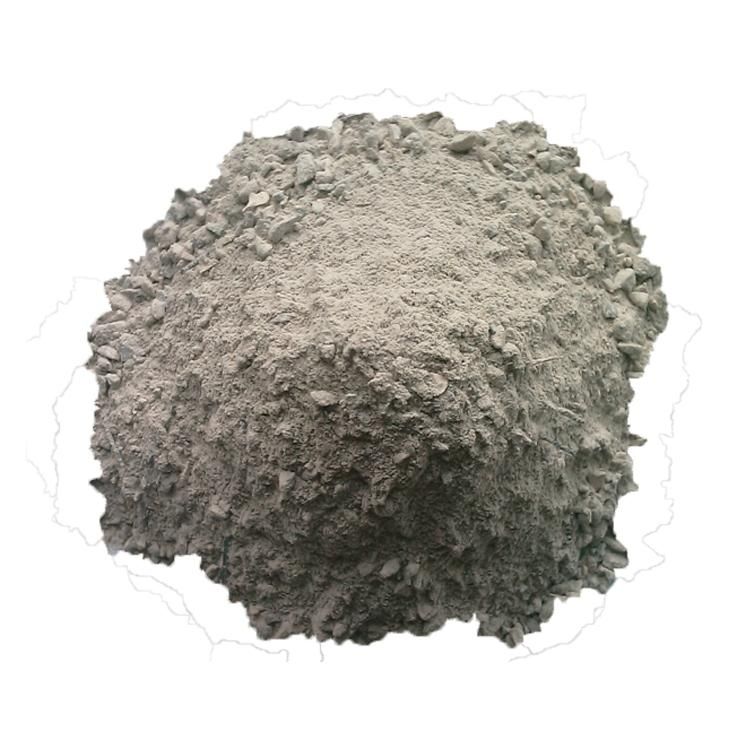
Low-Cement High-Alumina Castable
High-Alumina CastablesIron & Steel Metallurgy

Low-Cement High-Alumina Castable

Low-cement high-alumina castable with CaO≤2.5% and Al₂O₃≥65% reaches 1650℃ service. Dense micro-powder grading lowers porosity and raises hot strength.

Technical Data

Max. Service Temp.1650℃
Al₂O₃ Content≥65%
CaO Content≤2.5%
Bulk Density2.60 g/cm³
CCS (110℃×24h)≥70 MPa

Description

Low-Cement High-Alumina Castable

Material System & Positioning

Low-Cement High-Alumina Castable uses bauxite or corundum aggregate with CaO below 2.5%. The sharply reduced cement content, combined with fine powder and dispersants, achieves dense packing that improves cold/hot strength, high-temperature volume stability and slag resistance versus ordinary castables. It is a key grade of Henan Songrui for critical linings up to 1650℃ where slag attack and gas-flow erosion coexist.

Key Performance

  • Low-cement bond: CaO ≤2.5%, fewer low-melting phases, higher load softening point and hot strength.
  • Densification: tight fine-particle packing, low porosity, bulk density 2.60 g/cm³, strong slag penetration resistance.
  • Stable hot volume: minimal softening, good load-bearing up to 1650℃.
  • Erosion resistance: excellent against slag and gas-flow erosion for casthouses and ladles.
  • Good workability: vibration castable for complex zones.

Applications

  • Steel & Iron: BF casthouse main/branch troughs and covers, ladle permanent and wall linings, mixers, EAF roof delta zones.
  • Power Boilers: CFB cyclone body/cone and standpipes, burner zones and refractory belts.
  • Cement: kiln nose ring protection, cooler hot walls.
  • Industrial Furnaces: reheating furnace hot hearths, soaking furnace walls, forge furnace chambers.

Selection Advice

This grade sits between ordinary high-alumina and ultra-low-cement castables in cost and performance. For mild service up to 1600℃ use LA-60; for slag-exposed life-critical linings (casthouses, ladle permanent layers) choose this product; for near-corundum performance upgrade to ultra-low-cement.

Installation & Maintenance

Water is critical: keep to the datasheet (typically 5-7%). Force-mix, vibrate fully, cure and heat up per the low-cement schedule to avoid explosive spalling.

Quality Assurance

Henan Songrui New Refractory Materials Co., Ltd. (Xuanhua Town Industrial Park, Henan) is a 2024 Class A taxpayer and SRDI SME with a full production line and testing laboratory. For selection, quotation or installation guidance, contact Manager Zheng (17513376789 / 17513376789@163.com).

Key Features

  • CaO below 2.5%, low-cement bond with high hot strength
  • Fine-particle packing for lower porosity than ordinary castables
  • Good slag and gas-flow erosion resistance
  • Stable high-temperature volume with limited softening
  • Good workability for vibration casting of complex parts
  • Suited to casthouses, reheating furnaces and ladle permanent linings

Typical Applications

Low-cement high-alumina castable achieves denser hot structure with reduced CaO, for demanding metallurgical and power applications:

  • Steel & Iron: BF casthouse main and branch troughs, taphole covers, ladle permanent and wall working layers, mixer linings, EAF roof delta zones.
  • Power Boilers: CFB cyclone body and cone, standpipe legs, burner zones and refractory belts.
  • Cement: rotary kiln nose ring protection, cooler hot-section walls.
  • Industrial Furnaces: reheating furnace hot hearths, soaking furnace walls, forge furnace chambers.
  • Advantage: service up to 1650℃, excellent slag erosion and gas-flow wear resistance for critical zones.

FAQs

Difference between low-cement and ordinary high-alumina castable?

Low-cement grade has CaO below 2.5% with fine-particle packing for denser structure, lower porosity, higher hot strength and better slag resistance for troughs and ladles.

Where is low-cement high-alumina castable used?

Used for BF casthouse troughs, ladle permanent layers and walls, mixer linings, CFB cyclones and reheating furnace hot hearths.

How to control mixing water?

Water is critical: keep to the datasheet (typically 5-7%). Excess water significantly reduces strength and slag resistance.

Maximum service temperature of low-cement grade?

Maximum service temperature about 1650℃, recommended long-term up to 1600℃ with stable volume.

Get a Quote & Technical Support

Leave your details and we will reply within 24 hours about this product

Related Products

Phosphate Bonded High Alumina Castable
High-Alumina CastablesIron & Steel Metallurgy

Phosphate Bonded High Alumina Castable

Phosphate bonded high alumina castable, made of high-grade bauxite clinker with phosphate binder, offers high medium-temperature strength, excellent thermal shock resistance and abrasion resistance for hot blast stove, reheating furnace and soaking pit linings.

Al₂O₃ content≥65%

Learn More →
High-Alumina Castable LA-60
Featured
High-Alumina CastablesIron & Steel Metallurgy

High-Alumina Castable LA-60

LA-60 high-alumina castable uses bauxite clinker aggregate with Al₂O₃≥60% and a max service temperature of 1600℃. Its low-cement bond gives high density and good thermal-shock resistance.

Max. Service Temp.1600℃

Learn More →
Ultra-Low-Cement Castable
High-Alumina CastablesIron & Steel Metallurgy

Ultra-Low-Cement Castable

Ultra-low-cement castable with CaO≤1% and Al₂O₃≥70% serves to 1700℃. High-purity aggregates with close packing minimize low-melting phases, delivering near-corundum performance.

Max. Service Temp.1700℃

Learn More →
Self-Flowing High-Alumina Castable
High-Alumina CastablesPower & Boilers

Self-Flowing High-Alumina Castable

Self-flowing high-alumina castable with flow value ≥200mm levels and compacts under its own weight, eliminating vibration. Al₂O₃≥60%, 1600℃ max service.

Max. Service Temp.1600℃

Learn More →
17513376789
WeChat QR codeWeChat · 17513376789