KR Desulfurization Stirrer Castable
Other Monolithic RefractoriesIron & Steel Metallurgy

KR Desulfurization Stirrer Castable

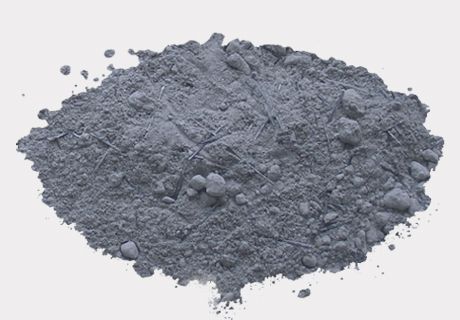
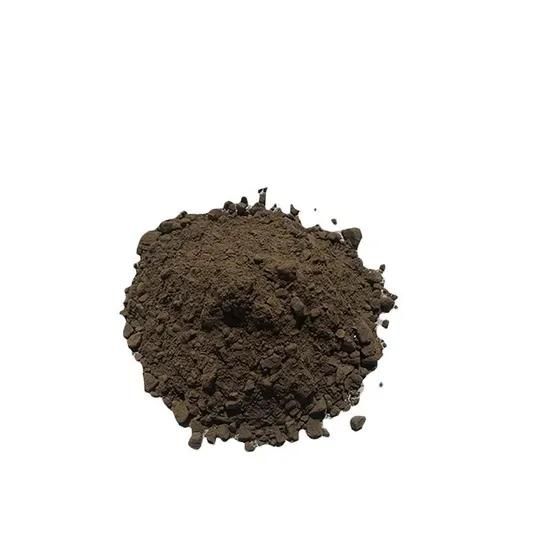
KR desulfurization stirrer castable is a mullite-corundum based monolithic for the outer lining of KR hot metal desulfurization impellers. Low-cement bonded and integrally cast, it resists hot metal and slag attack and thermal shock, delivering stable service life.

Technical Data

Al₂O₃ content≥ 75%
Bulk density≥ 2.75 g/cm³
CCS (1100℃×3h)≥ 60 MPa
MOR (1100℃×3h)≥ 8 MPa
PLC (1450℃×3h)± 0.5%
Thermal shock (1100℃ water)≥ 8 次
Service temperature≥ 1450℃

Description

KR Desulfurization Stirrer Castable

Working Conditions of KR Stirrer

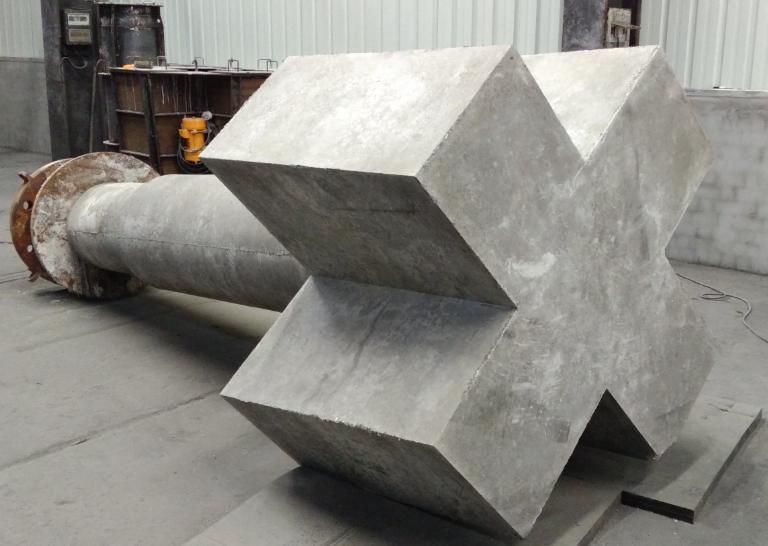
In the KR (Kambara Reactor) desulfurization process, a cross-shaped stirrer with a refractory castable lining is immersed into the hot metal ladle. Its rotation creates a vortex that draws CaO-based desulfurizer into the melt for full contact and reaction. The castable lining directly faces hot metal at about 1300–1450°C, chemical attack from desulfurizing slag, mechanical erosion from rotation, and repeated thermal shock as the stirrer is immersed and withdrawn each heat.

Main Failure Modes

  1. Thermal shock cracking: temperature difference between hot metal and air causes tensile cracks, leading to structural spalling.
  2. Slag and metal attack: CaO-based slag dissolves the castable matrix, fastest at blade corners.
  3. Mechanical wear: vortex flow erodes blade surfaces and thins the lining.
  4. Expansion mismatch: the steel core and castable have very different thermal expansion, causing stress concentration at the interface and possible damage around anchors.

Material Design

Board corundum provides erosion and wear resistance; mullite improves thermal shock resistance. Reactive alumina micropowder and microsilica enable a low-cement matrix with reduced CaO content. Optimized particle grading and admixtures achieve low water demand and high density for rapid strength development.

Installation and Baking

The stirrer is integrally cast by vibration, cured in the mold, demolded and dried, then baked slowly to above 1100°C before use. Heating rate must be controlled to avoid explosive spalling. A short low-speed conditioning run is recommended before normal desulfurization.

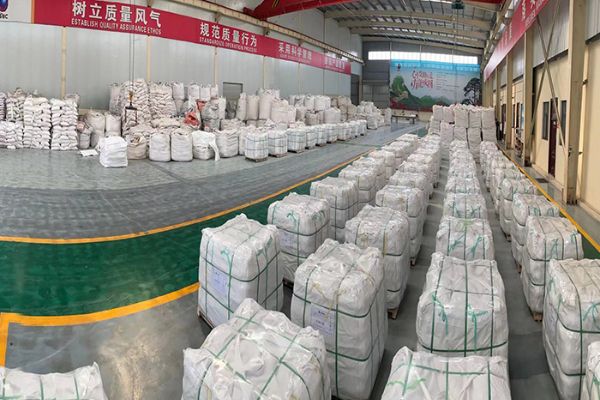
Henan Songrui New Refractory Materials Co., Ltd. customizes formulations for different hot metal ladle capacities and stirrer structures, with on-site installation guidance.

Key Features

  • Resists hot metal and slag: mullite-corundum aggregate system resists CaO-based slag and hot metal attack.
  • Thermal shock resistance: adapts to repeated immersion cycles without cracking or spalling.
  • High strength and density: low-cement bonding with optimized grading.
  • Integral casting: anchors to metal core for good integrity.
  • Stable service life: reduced stress concentration and local damage.
  • Custom formulations: adjusted by ladle capacity and stirrer structure.

Typical Applications

  • Integral casting of KR stirrer outer lining.
  • Stirrer blades and shaft protection layer.
  • Refractory package for hot metal desulfurization station.
  • Hot repair and local patching of stirrer lining.
  • Integral forming with air-cooled pipe structure.

FAQs

What limits the service life of KR stirrer castable?

Mainly thermal shock cracking and slag-metal attack, plus baking quality and stirrer design (anchor type, rounded blade corners). Good design and baking extend lining life significantly.

How is the castable bonded to the metal core?

V-shaped anchors welded on the metal core lock the integrally cast lining, forming a mechanical interlock plus sintered bond after baking.

Get a Quote & Technical Support

Leave your details and we will reply within 24 hours about this product

Related Products

Magnesia-Alumina Spinel Castable
Other Monolithic Refractories

Magnesia-Alumina Spinel Castable

Magnesia-alumina spinel castable is an alkaline monolithic refractory made of fused magnesia and alumina-magnesia spinel, offering excellent slag resistance and thermal shock resistance for steel ladle and hot metal ladle working linings.

Chemical composition MgO≥55%

Learn More →
Anhydrous Taphole Mud
Other Monolithic Refractories

Anhydrous Taphole Mud

Anhydrous taphole mud is made of corundum, silicon carbide and coke fines with resin binder for blast furnace taphole sealing. It sinters fast, plugs densely and resists molten iron and slag scouring, ideal for large and medium blast furnaces under high pressure.

Al₂O₃ content30%~45%

Learn More →
Magnesia Castable
Other Monolithic Refractories

Magnesia Castable

Magnesia castable is made from sintered magnesia as aggregate and fines, offering high MgO content, strong resistance to basic slag and high refractoriness. It is ideal for steel ladle slag lines, LF refining furnaces and tundishes.

MgO content≥ 85%

Learn More →
Alumina-Magnesia Ladle Castable
Other Monolithic Refractories

Alumina-Magnesia Ladle Castable

Alumina-magnesia ladle castable (Al2O3-MgO) with in-situ spinel formation offers excellent slag resistance, thermal shock resistance and longer service life, ideal for integral lining and repair of steel ladles.

Al2O3 content75%~85%

Learn More →
17513376789
客服微信二维码客服微信 · 17513376789