RH Dip Pipe Castable
Other Monolithic RefractoriesIron & Steel Metallurgy

RH Dip Pipe Castable

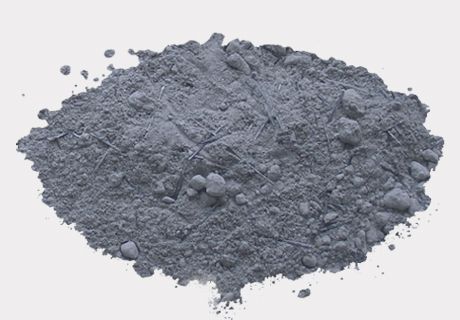
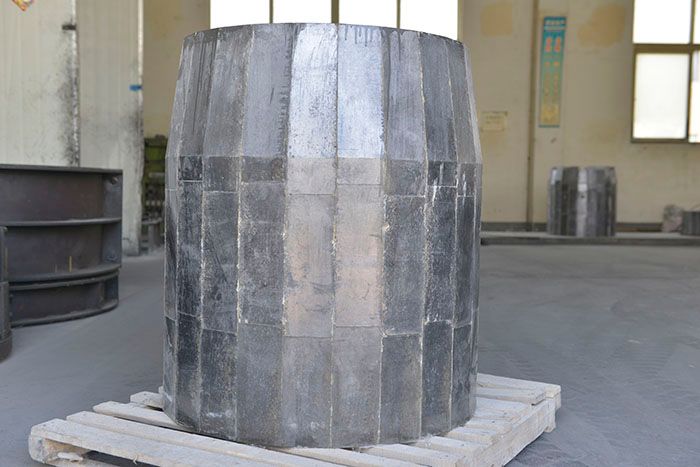
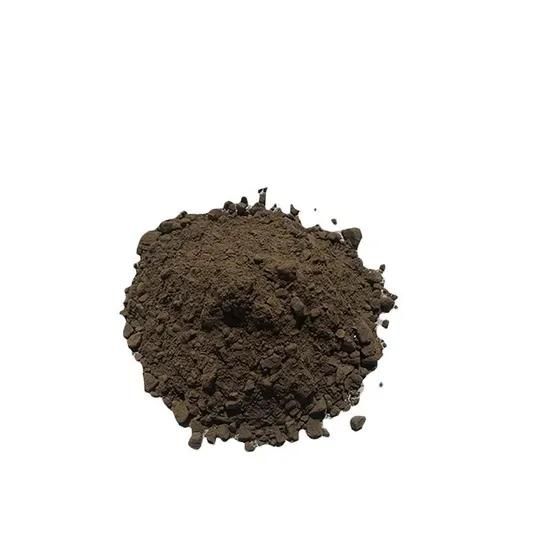
RH dip pipe castable is a low-cement bonded corundum-magnesia alumina spinel monolithic for RH vacuum refining immersion pipes. It resists thermal shock and spalling, solving cracking and detachment from thermal expansion mismatch among shell, bricks and castable.

Technical Data

Al₂O₃ content≥ 88%
MgO content3% – 8%
Bulk density≥ 3.00 g/cm³
CCS (1500℃×3h)≥ 120 MPa
MOR (1500℃×3h)≥ 12 MPa
PLC (1500℃×3h)± 0.5%
Thermal shock (1100℃ water)≥ 10 次
Service temperature≥ 1600℃

Description

RH Dip Pipe Castable

RH Refining and Dip Pipe Structure

RH vacuum refining inserts two immersion pipes into molten steel through a vacuum vessel to perform degassing, decarburization, oxygen blowing, powder injection desulfurization, inclusion removal and temperature and composition homogenization. From inside outward, a dip pipe consists of magnesia-chromite (or chromia-free) ring bricks, self-flowing material, the steel shell and the outer castable. Working directly in steel above 1600°C for 30–40 minutes per heat, the dip pipe is the most refractory-intensive part of RH refining.

Service Conditions and Failure

The outer castable suffers chemical attack from steel and slag, erosion from steel flow, and thermal shock during handling, preheating and immersion. Thermal expansion of steel shell and refractories differs by nearly an order of magnitude, so interface cracks develop at high temperature. Uncontrolled cracks lead to spalling of the outer castable, sinking of ring bricks and premature offline of the dip pipe.

Formula Design

Tabular corundum provides erosion resistance and strength; fused magnesia-alumina spinel improves slag resistance and thermal shock resistance. Reactive alumina and spinel micropowders with microsilica and superplasticizer achieve low-cement, low-water bonding. Larger critical particle size plus small additions of zirconia fibers and thermal shock stabilizers further improve spalling resistance and hot strength.

Construction and Maintenance

Interlock profiles and metal anchors at the ring-brick/castable interface improve bottom integrity. The castable is vibration-cast, cured and dried, then preheated to about 1100°C before use. Regular gunning maintenance controls crack growth and extends dip pipe life.

Henan Songrui New Refractory Materials Co., Ltd. supplies custom formulations with matching self-flowing materials.

Key Features

  • Spalling resistance: corundum-spinel system with zirconia fiber and stabilizers reduces high-temperature spalling.
  • Steel and slag resistance: high-purity corundum resists 1600°C steel and slag attack.
  • Structural integrity: solves cracking from expansion mismatch among shell, bricks and castable.
  • Reinforced interface: interlock profiles and metal anchors prevent castable detachment.
  • High hot strength: CCS 1500℃×3h ≥120 MPa.
  • Custom formulations: adjusted by RH furnace type and dip pipe structure.

Typical Applications

  • Integral casting of RH dip pipe outer lining.
  • Casting and anchoring at ring-brick joints.
  • Lower vacuum vessel lining.
  • Gunning repair package for dip pipes.
  • Complete supply with chromia-free ring bricks and self-flowing material.

FAQs

Why does the outer castable of the dip pipe detach easily?

Large thermal expansion mismatch among steel shell, ring bricks and castable creates interface stress and cracks. The solutions are better anchoring design and higher thermal shock resistance and hot strength of the castable.

Where can RH dip pipe castable be applied?

Mainly on the outer lining and ring-brick joints of immersion pipes, also suitable for lower vacuum vessel lining; formulations can be customized.

Get a Quote & Technical Support

Leave your details and we will reply within 24 hours about this product

Related Products

Magnesia-Alumina Spinel Castable
Other Monolithic Refractories

Magnesia-Alumina Spinel Castable

Magnesia-alumina spinel castable is an alkaline monolithic refractory made of fused magnesia and alumina-magnesia spinel, offering excellent slag resistance and thermal shock resistance for steel ladle and hot metal ladle working linings.

Chemical composition MgO≥55%

Learn More →
Anhydrous Taphole Mud
Other Monolithic Refractories

Anhydrous Taphole Mud

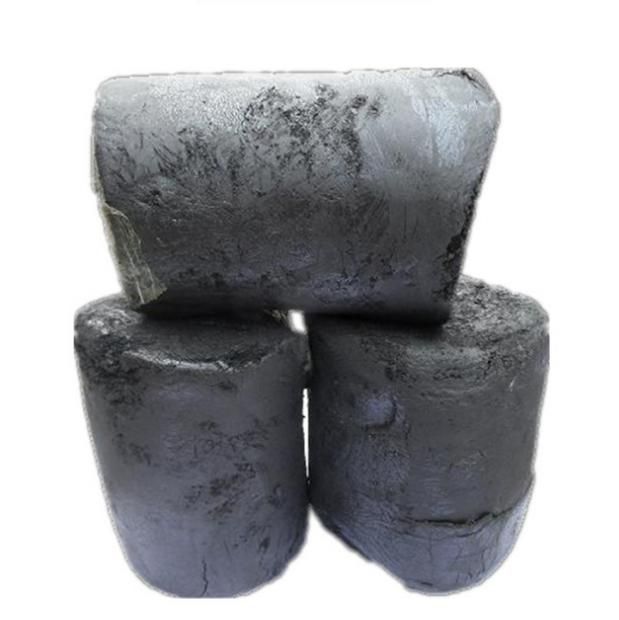
Anhydrous taphole mud is made of corundum, silicon carbide and coke fines with resin binder for blast furnace taphole sealing. It sinters fast, plugs densely and resists molten iron and slag scouring, ideal for large and medium blast furnaces under high pressure.

Al₂O₃ content30%~45%

Learn More →
Magnesia Castable
Other Monolithic Refractories

Magnesia Castable

Magnesia castable is made from sintered magnesia as aggregate and fines, offering high MgO content, strong resistance to basic slag and high refractoriness. It is ideal for steel ladle slag lines, LF refining furnaces and tundishes.

MgO content≥ 85%

Learn More →
Alumina-Magnesia Ladle Castable
Other Monolithic Refractories

Alumina-Magnesia Ladle Castable

Alumina-magnesia ladle castable (Al2O3-MgO) with in-situ spinel formation offers excellent slag resistance, thermal shock resistance and longer service life, ideal for integral lining and repair of steel ladles.

Al2O3 content75%~85%

Learn More →
17513376789
客服微信二维码客服微信 · 17513376789