
Featured
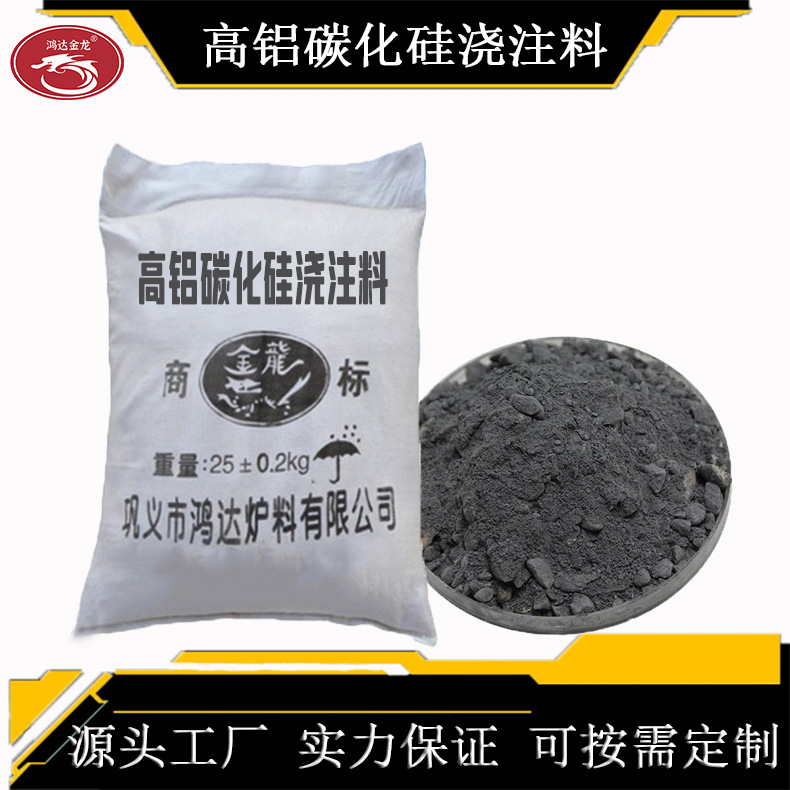
Wear-Resistant Castable
Wear-resistant castable with hard abrasion-resistant aggregate, Al₂O₃≥70%, 1500℃ max service and CCS≥90MPa. Dense matrix resists particulate erosion in gas-solid two-phase flow.
Learn More →Waste Heat Boiler · Inlet Duct
The waste-heat boiler inlet duct is the throat where hot gas enters the boiler. Gas temperature is high (800–1000℃), dust load heavy (especially incinerator and smelter gas) and velocity high. The inlet lining endures continuous high-velocity dust-laden gas abrasion—the fastest-wearing zone of WHB linings.
Dust-laden gas scouring: high-temperature gas carrying dust abrades the duct wall at high velocity, thinning the surface layer by layer. Local intensified scouring: at elbows, transitions and flow guides, direction changes concentrate scouring far beyond straight sections, forming pits. Thermal shock: boiler start/stop and load swings cause temperature changes; thermal-shock stress worsens lining cracking. Corrosion: acidic gas components condense and attack in cooler zones.
After inlet lining wear, vessel walls overheat with leakage risk; worn debris entering the boiler may damage heating surfaces; forced shutdown hurts heat recovery and unit availability.
Select the inlet duct for "high wear resistance + thermal-shock resistance":
Monolithic placement: cast duct linings monolithically with precise formwork at irregular zones. Vibration: vibrate fully. Water control: keep at the datasheet lower limit for wear strength. Bake-out: follow the curve to prevent wear-layer spalling.
Monitor duct wall temperature and gas resistance; investigate on anomalies. At maintenance, measure inlet and elbow residual thickness and patch or replace zones beyond limits; record wear data to optimize flow-guide structure and wear design.
Wear-resistant castable with hard abrasion-resistant aggregate, Al₂O₃≥70%, 1500℃ max service and CCS≥90MPa. Dense matrix resists particulate erosion in gas-solid two-phase flow.
Learn More →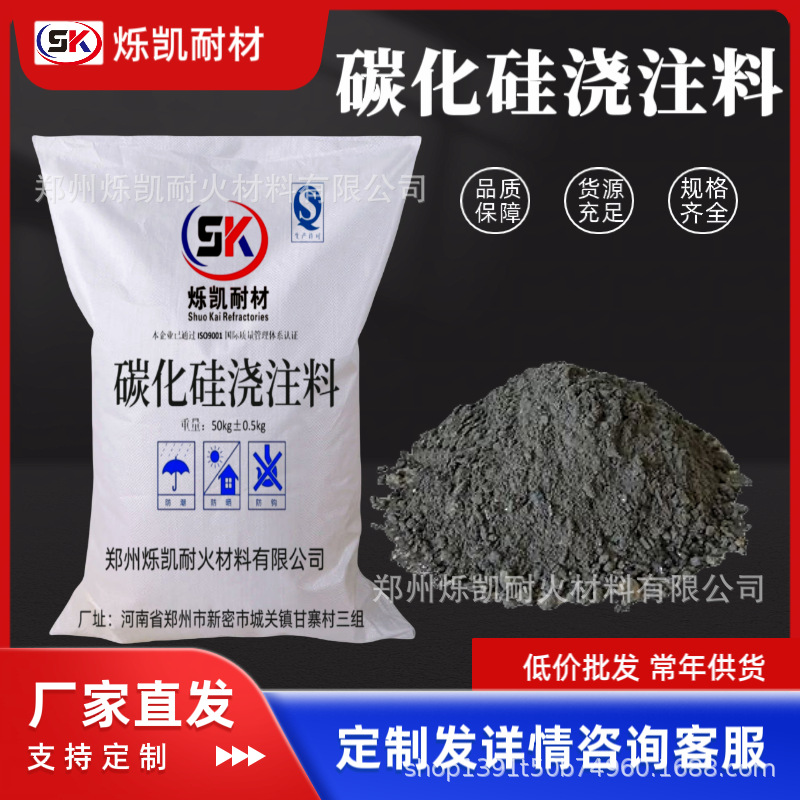
SiC wear-resistant castable with SiC≥50% aggregate offers extreme hardness and erosion resistance to 1600℃. High thermal conductivity promotes slag-coating self-protection. For CFB boiler cyclone barrels and cones, loop seals, copper flash furnace cones, launders and elbows under heavy wear.
Learn More →Contact Us
 WeChat · 17513376789