
Tank Bottom Paving Wear

Glass Tank Wall · Bottom

Problem Details

Background

The glass furnace tank bottom holds static and flowing glass melt. The paving joints and castable leveling layer contact glass melt around 1500℃ for long periods. Melt penetration and attack on the bottom—especially "upward drilling"—is the main bottom failure mode, directly affecting furnace safety and campaign life.

Failure Mechanism

Melt penetration: glass melt penetrates downward along paving joints and pores, reacting with the underlying castable into an altered layer. Upward drilling: penetrated melt reacts with refractories into low-density phases that "drill upward" under temperature and buoyancy, gradually hollowing the bottom structure. Joint attack: paving joints are the preferred penetration path; over-wide joints or mismatched mortar worsen attack. Temperature effect: higher melt temperature and fluidity increase penetration and erosion.

Consequences

Upward drilling is the most dangerous bottom failure: it shortens furnace life at best, and at worst melt breaks through the bottom in a breakout that endangers personnel and causes huge economic loss.

Solution

Material Selection and Parameters

Design the tank bottom as a two-layer "leveling + paving" structure:

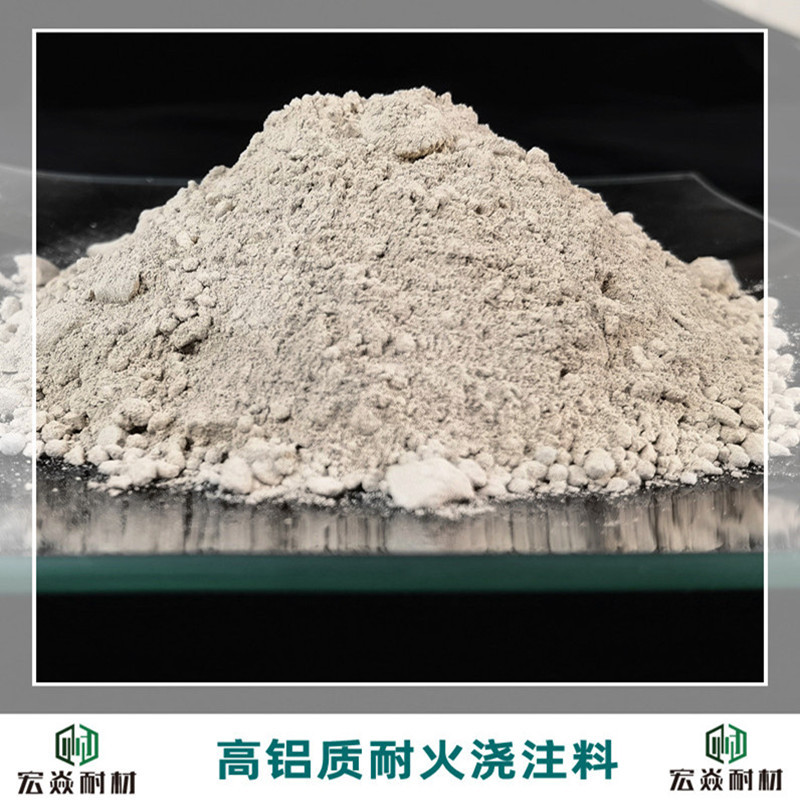
  • Leveling layer: corundum castable leveling (Al₂O₃≥90%), cast monolithically with a flat surface, providing a stable base for paving bricks and blocking penetration;
  • Paving layer: fused-cast AZS bricks with extreme density (apparent porosity ≤2%) and outstanding melt resistance; pave tightly with staggered joints;
  • Joint material: fill joints with high-performance mortar matching the brick or glass sealant to eliminate penetration paths.

Installation Essentials

Monolithic leveling: cast the corundum leveling layer monolithically with full vibration and a flat finish. Paving: lay bricks per design with staggered joints, uniform joint width and dense fill. Bake-out: heat slowly per the bottom curve to prevent steam spalling of the leveling layer. Acceptance: check paving flatness and joint fullness after placement.

Maintenance

Control melt temperature within process range to avoid prolonged over-temperature; monitor bottom temperature and breakout signs (abnormal bottom temperature rise) and plan repairs promptly on anomalies; at mid-campaign maintenance, inspect paving bricks and leveling layer and patch local damage.

Recommended Products

Brown Corundum Castable
Featured

Brown Corundum Castable

Brown corundum castable based on dense fused alumina with Al₂O₃≥85%, 1750℃ max service and CCS≥90MPa. High hardness, refractoriness and excellent slag resistance. Used in steel ladle working linings and slag lines, main iron runners, converter mouth areas and CFB boiler cyclone wear zones.

Learn More →

Castable Precast Blocks
FeaturedPrecast

Castable Precast Blocks

Castable precast blocks are factory-cast, cured and fired to drawings with ±2mm dimensional accuracy, 1700℃ max service. Uniform quality with crane-installed placement that eliminates formwork, casting and curing—dramatically shortening outage time.

Learn More →

More questions? Send us an inquiry

Contact Us

Contact
17513376789
WeChat QR codeWeChat · 17513376789